
Visual Management in Chemical Manufacturing: What Works on the Shop Floor
Visual Management in Chemical Manufacturing: What Works on the Shop Floor
Walk into most chemical manufacturing sites and you’ll find the same challenges: complex equipment with non-standard tools, strict safety protocols, audit pressure, and shift teams who need to hand over clearly and quickly. Visual management isn’t a nice-to-have in this environment – it’s a safety requirement.
But not all visual management solutions are built for chemical environments. Here’s what we’ve learned from working with manufacturers in the chemicals sector, and what actually holds up when things get tough.
The environment changes everything
Chemical manufacturing sites are harder on equipment than most industries. Exposure to solvents, cleaning agents, and airborne chemicals accelerates corrosion and material degradation faster than you’d expect. We found this out first-hand when a client needed a freestanding communication board on a frame – standard steel wasn’t going to last. We built the frame from stainless steel, and it’s held up ever since.
It sounds like a small detail, but it matters: a board that starts rusting or a holder that warps within 12 months doesn’t just look bad, it undermines the whole culture of standards you’re trying to build. If your visual management tools look neglected, so does your 5S programme.
When specifying anything for a chemical environment, always ask: what is this going to be exposed to, and what’s it made of?

Shadow boards built around your specific equipment
Chemical manufacturing sites tend to use highly specific, non-standard equipment. Specialist sampling tools, bespoke connectors, unusual gauges – the kind of items that don’t fit neatly into off-the-shelf foam holders.
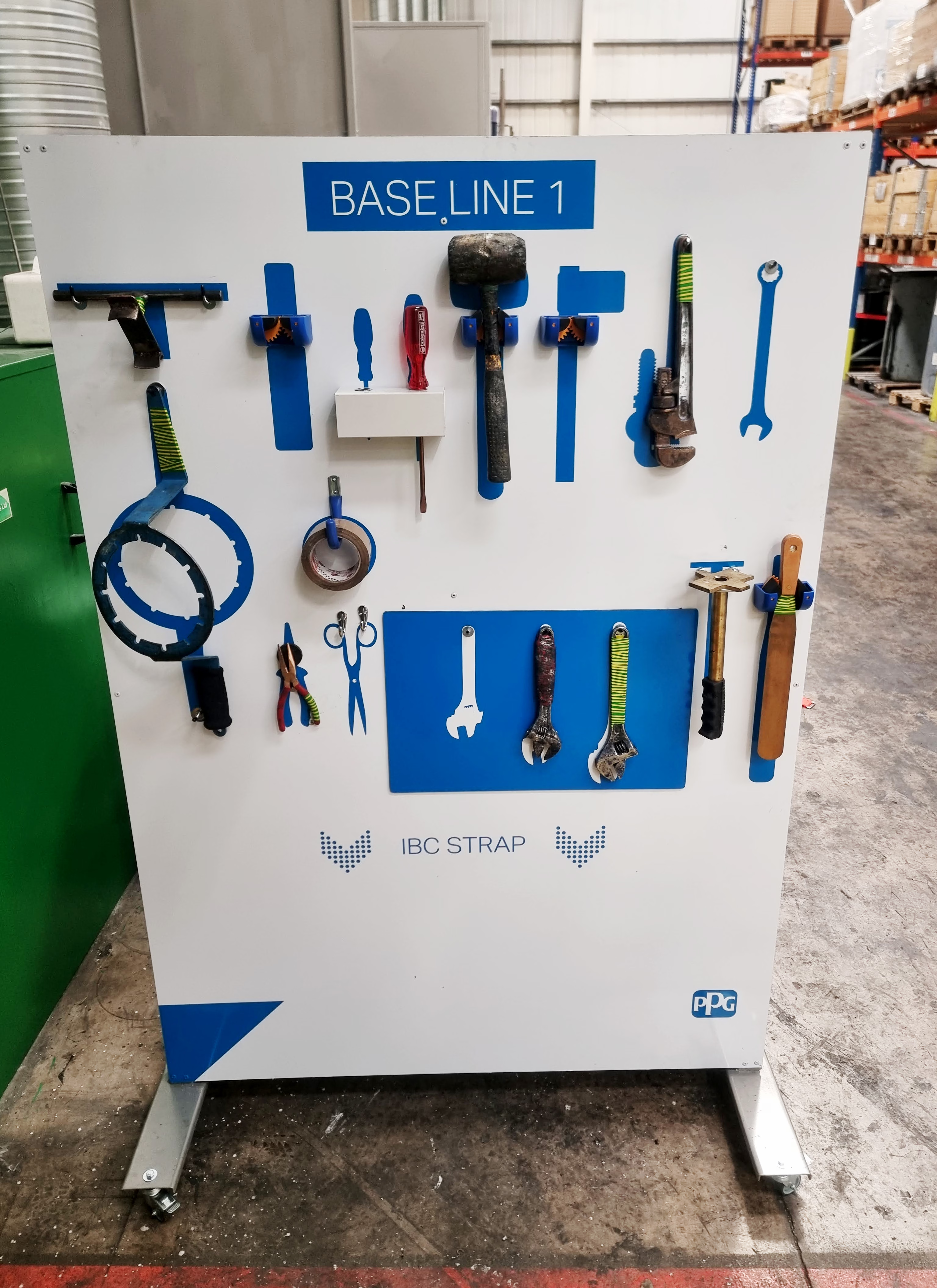
This is exactly where bespoke shadow boards earn their place. Rather than forcing equipment into holders that don’t quite fit, we engineer or 3D print holders to the exact profile of each item. Every tool has a shadow, every shadow has one tool, and anyone walking past can see at a glance whether something is missing or in the wrong place.
For chemical sites this goes beyond organisation – it’s a safety issue. Spill kits, first aid stations, eyewash points and burn treatment kits all benefit from this approach. When someone needs that equipment, they need to find it immediately. A properly configured shadow board with clearly designated zones for burn kits, eye wash, and emergency spill equipment means there’s no searching, no confusion, and no critical seconds lost.

Communication and tracking boards that handle complexity
Chemical manufacturers typically have a lot of data to track. Shift performance, safety incidents, quality metrics, compliance checks, process targets – it’s rarely a simple picture.
Generic off-the-shelf notice boards, or lines drawn on a Nobo board, don’t scale to this complexity. What tends to happen is the board becomes cluttered, people stop updating it, and it stops serving any purpose.
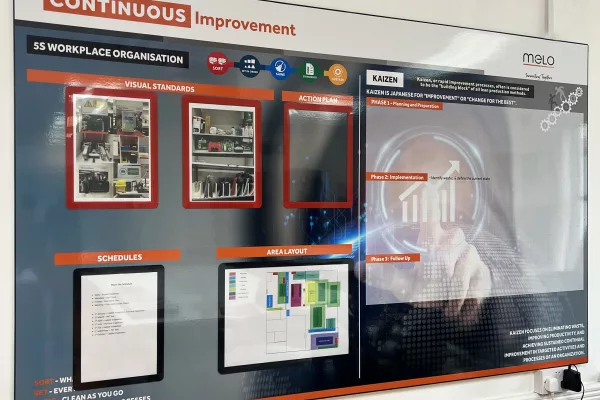
Bespoke communication boards designed around what your team actually needs to track are a different thing entirely. We work with clients to understand their metrics, their workflow, and how their teams interact with the board during shift handovers and daily stand-ups. The result is a board people use because it’s built around them, not one they’ve been handed.
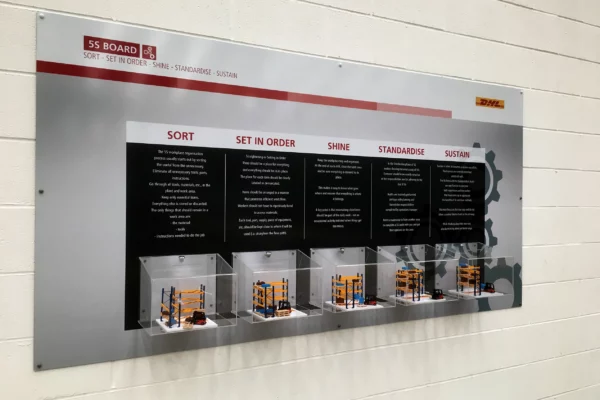
For one client moving into a formal 5S programme, we combined their own process knowledge with insight from previous implementations to build a board their team genuinely owned. That ownership piece is important – a board imposed on a team rarely sticks; a board shaped by the team usually does.
Audit readiness and site visits
One of the consistent drivers we hear from chemicals clients is the need to present well – whether for an internal 5S audit, a visit from a parent company, or an external certification body.
A well-implemented visual management system does a lot of the talking for you. Clean, uniform signage and visual controls, consistent colour coding across zones, shadow boards with clear ownership – these communicate a culture of standards before anyone has opened a file or answered a question.
Colour coding is particularly useful in chemical environments where different zones, teams or chemical classifications need clear visual separation. We’ve used colour coded shadow boards to solve tool cross-contamination between areas – a simple, visible solution to a problem that previously relied on people remembering the rules.
What good looks like
The sites we see that get this right share a few things in common:
- Uniformity — boards, holders and signage from a consistent system, not a patchwork of different suppliers and DIY solutions
- Specificity — holders and layouts designed for the actual equipment on site, not generic approximations
- Durability — materials chosen for the environment, not just the budget
- Ownership — teams involved in the design, so the system reflects how they actually work
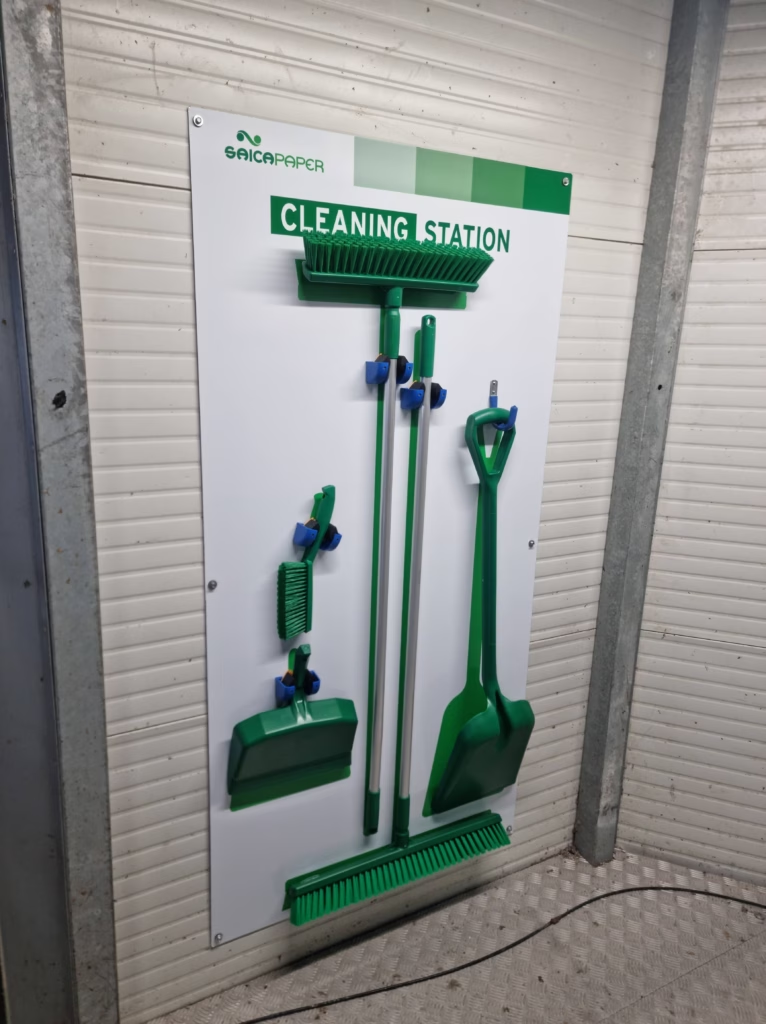
If your site is currently using improvised notice boards, in-house tool holders, or a mix of products from different suppliers, the visible difference a complete, matched system makes is significant – both for day-to-day use and for how your site presents to visitors.
Explore our range
Take a look at our full product range to see what we can build for you.